



Net energy metering (NEM) is a billing arrangement used in some countries, regions, or utility plans. It can allow solar PV users to offset imported electricity with exported solar energy according to local rules.
IAMMETER provides metering and monitoring functions that can help users understand grid import, grid export, and solar self-consumption. However, IAMMETER does not determine whether your site is eligible for NEM.
Before using NEM-related functions, please confirm the billing rules with your local utility, electricity retailer, or grid operator.
Even if NEM is not available in your region, IAMMETER can still monitor:
For general solar monitoring, start here:
In a solar PV system, the home may import electricity from the grid at some times and export surplus solar energy at other times.
NEM rules may allow import and export to be offset in a specific way. The details vary by location and utility plan.
Examples of policy differences include:
Because these rules are policy-dependent, NEM should not be treated as a universal solar billing model.
IAMMETER three-phase meters, including WEM3080T, WEM3050T, and WEM3046T, support Net Metering Mode.
This function is mainly useful when a three-phase system needs to calculate net grid power across phases.
For example, assume a three-phase system has the following power values for one hour:
Phase A:  2 kW importing from grid
Phase B:  1 kW importing from grid
Phase C: -3 kW exporting to grid
If the three phases are netted together:
2 kW + 1 kW - 3 kW = 0 kW
In a NEM-style calculation, the net grid energy during this period may be treated as zero. In normal per-phase import/export calculation, the system may show both imported and exported energy.
| Mode | Grid Consumption | Exported Energy | Billing result in this example |
|---|---|---|---|
| Net Metering Mode | 0 kWh | 0 kWh | Net result is zero |
| Normal Mode | 3 kWh | 3 kWh | Import and export are counted separately |
This is a technical metering mode. Whether it matches your real electricity bill depends on local billing rules.
NEM mode may be useful if:
NEM mode may not be needed if:
For most home solar monitoring use cases, IAMMETER's normal grid import/export monitoring is still useful even without NEM.
Many solar users do not have NEM, but they still need accurate import/export data.
IAMMETER can help users understand:
If exported energy is high and feed-in tariff is low, users may be able to save more by using surplus solar energy inside the home.
For example, an electric boiler or water heater can be controlled with WPC3700 to use more solar surplus.
Learn more:
If your meter and firmware support NEM mode, you can enable it directly from the meter's local web UI.
In newer firmware, NEM no longer needs to be enabled through the old local API method, and you do not need to verify it through monitorjson.
Connect to the same local network as the IAMMETER meter, then open the meter's local IP address in a browser.
Enter the meter's local IP address shown by your router or network scanner.
Go to the settings page in the local web UI.
In Advanced Settings, enable Net Metering.
This option replaces the old API-based method for enabling NEM mode.
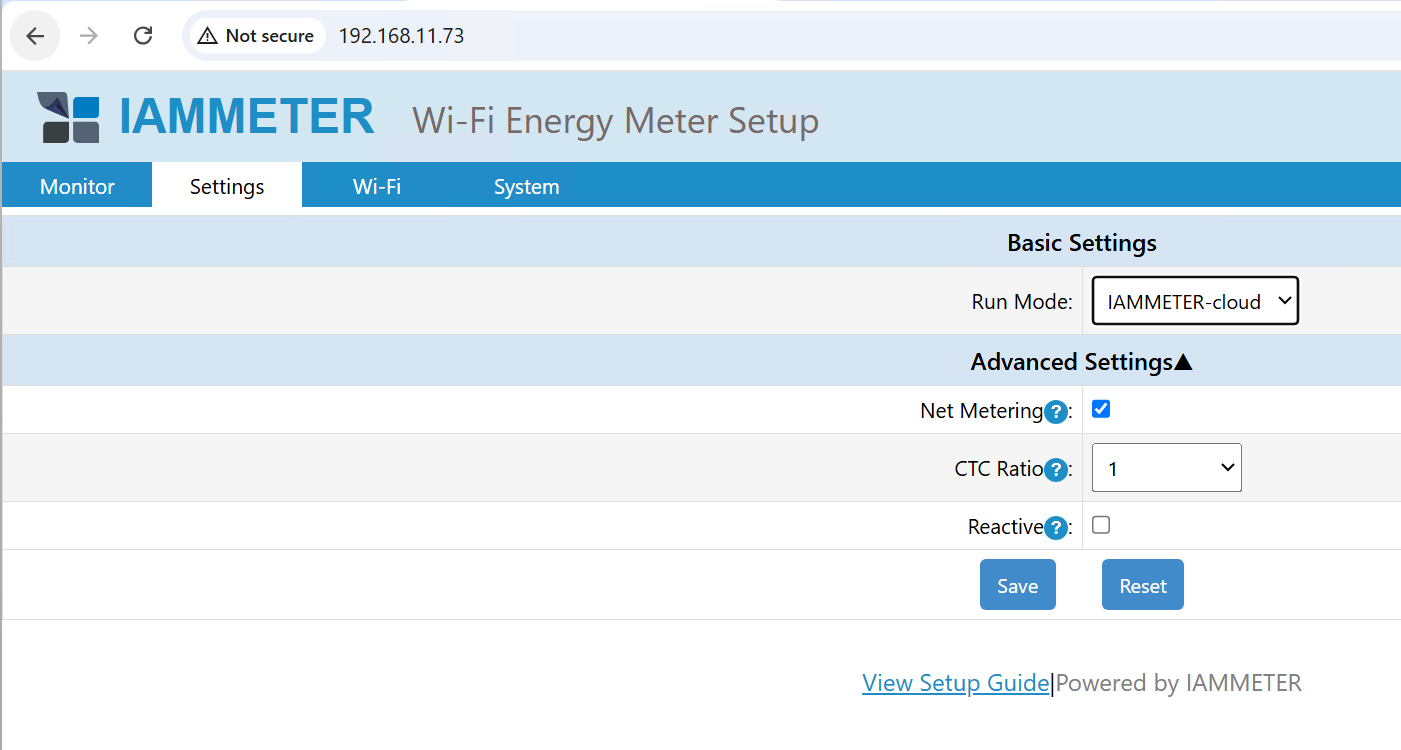
If you do not see this Advanced Settings page, refer to the firmware UI update notes or contact IAMMETER support.
If your installation requires NEM data to be uploaded and displayed in IAMMETER-Cloud, change the upload type to Net Metering in IAMMETER-Cloud.
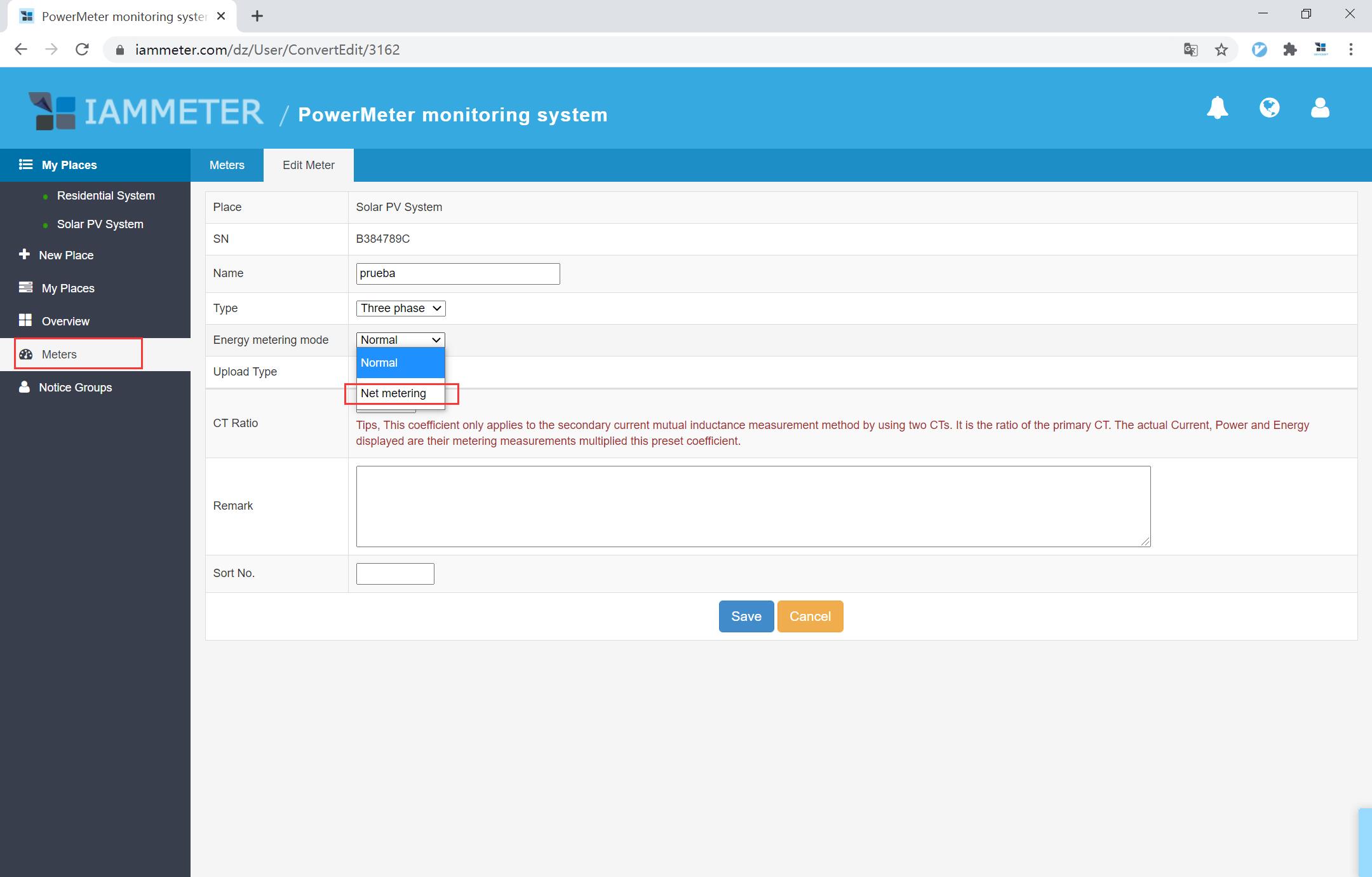
Use Type settings must be correct.For wiring and setup details:
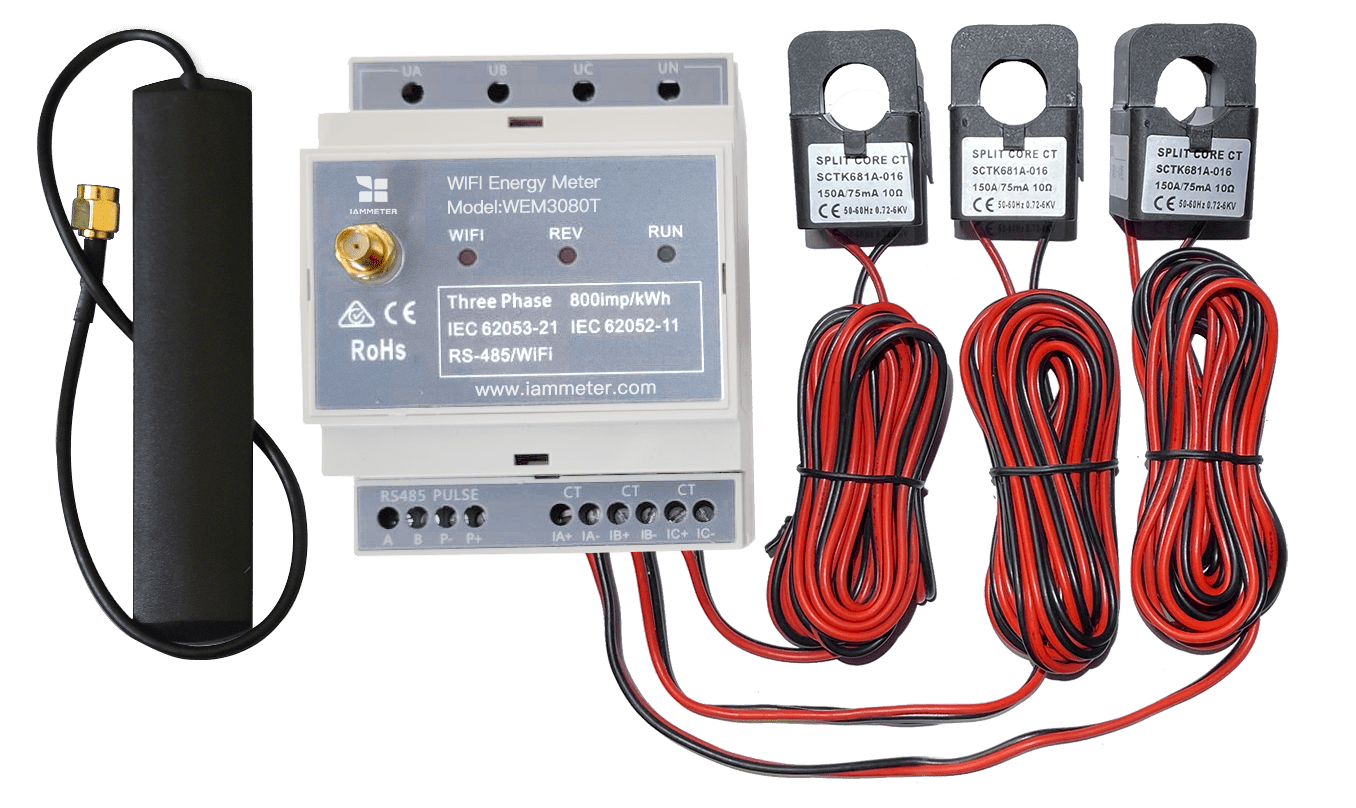
Three Phase Wi-Fi Energy Meter (WEM3080T)
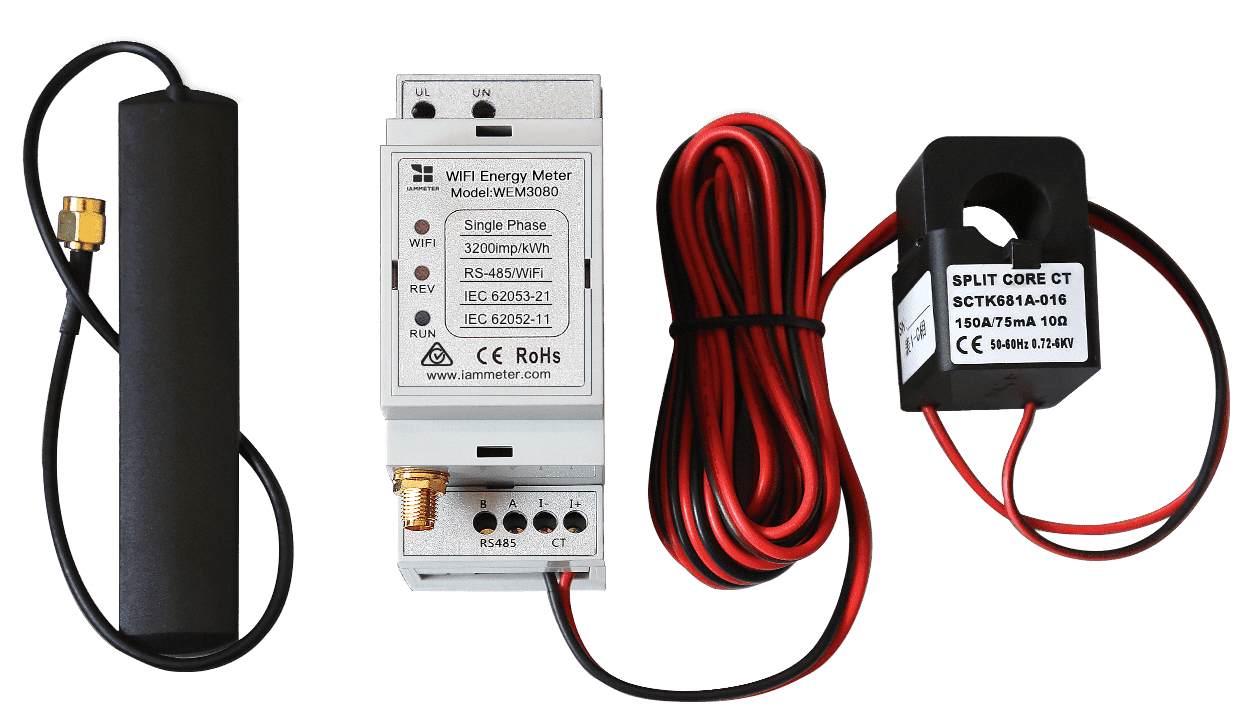
Single Phase Wi-Fi Energy Meter (WEM3080)
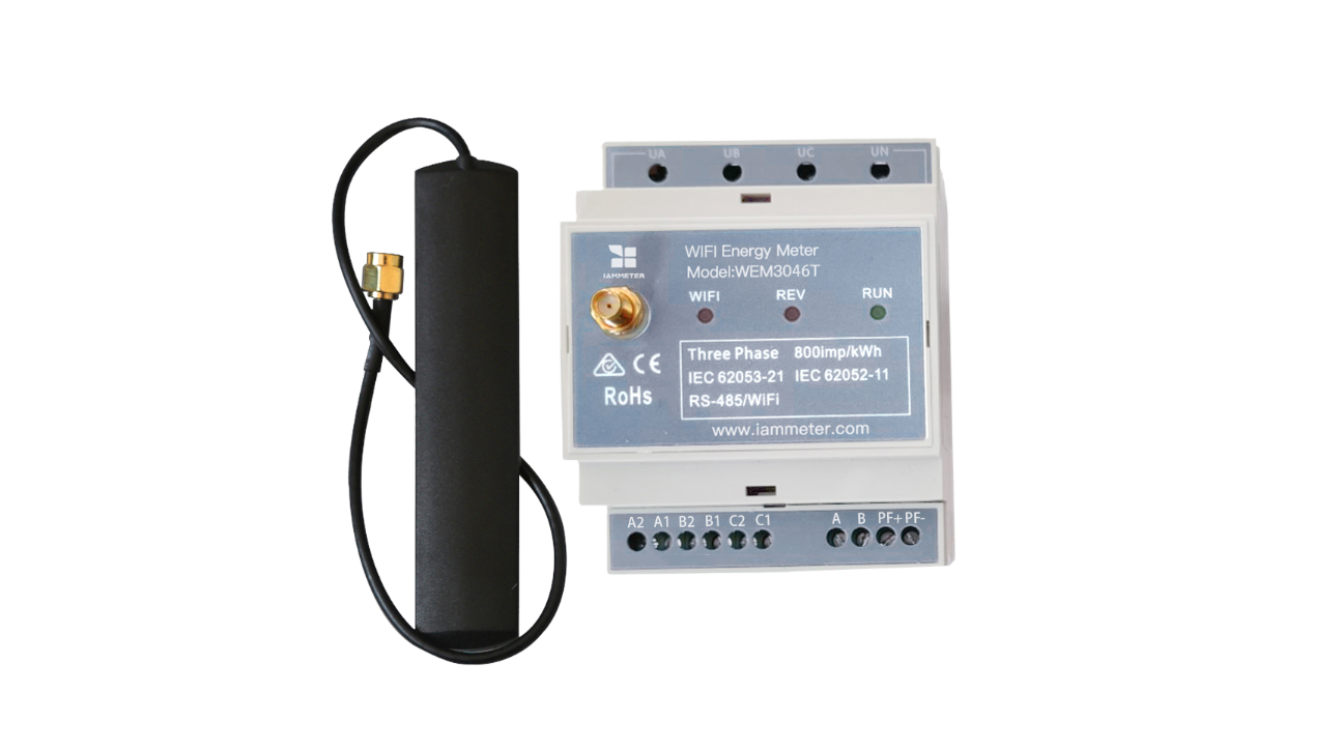
Three Phase Wi-Fi Energy Meter (WEM3046T)
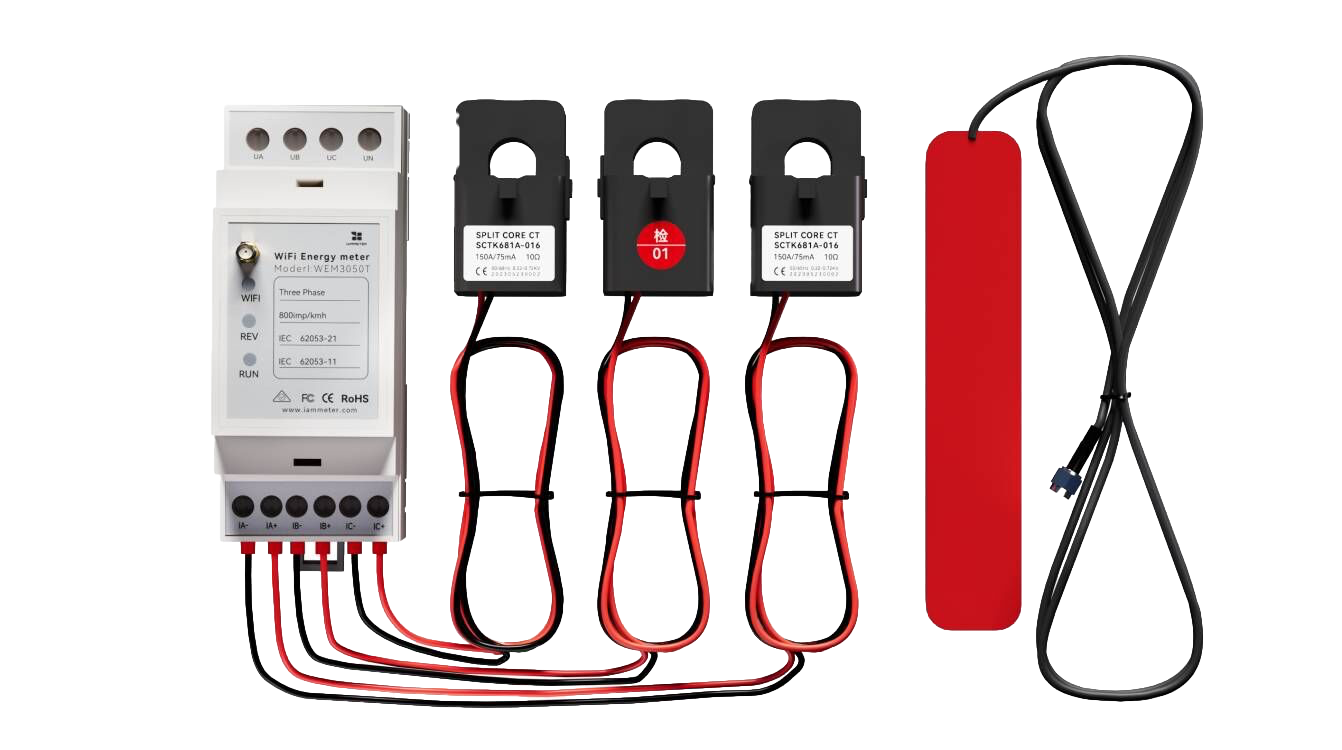
Three Phase Wi-Fi Energy Meter (WEM3050T)